 An official website of the United States government
Past Directors
Helene M. Langevin, M.D.
Helene M. Langevin, M.D., is Director Emeritus of the National Center for Complementary and Integrative Health (NCCIH) at the National Institutes of Health (NIH) and served as director of NCCIH from 2017 to 2025.

Read more about Dr. Langevin
Helene M. Langevin, M.D., is Director Emeritus of NCCIH, the leading Federal agency for research on integrative and complementary health practices. An accomplished researcher and physician, Dr. Langevin served as director of NCCIH from 2017 to 2025.
As NCCIH director, Dr. Langevin led several NIH-wide initiatives that placed whole person health at the forefront of NIH’s strategy to address the burden of chronic disease in the United States. This includes the recent funding of the Whole Person Reference Physiome and Coordination Center, led by NCCIH and co-funded by 20 NIH Institutes, Centers, and Offices, to create a cross-system network map of healthy physiological function. In collaboration with the Centers for Disease Control and Prevention National Center for Health Statistics, she steered the development of the Whole Person Health Index. Dr. Langevin also co-led the CARE for Health™ initiative and the NIH Pragmatic Trials Collaboratory to create a learning health system, embedding pragmatic research into health care settings to accelerate the implementation of research findings into clinical practice. Together with leadership from NIH’s Office of Nutrition Research, Office of Dietary Supplements, and the National Institute of Nursing Research, she defined the Nutrition Continuum, spanning across biological, behavioral, social, and environmental domains and linking nutrition research across NIH. In addition, Dr. Langevin served as chair of the Interagency Pain Research Coordinating Committee, co-chair of the Helping to End Addiction Long-term® Initiative (NIH HEAL Initiative®), co-chair of the Bridge to Artificial Intelligence (Bridge2AI) program, and chair of the Research Services Working Group. She also served as an adjunct investigator at the National Institute of Dental and Craniofacial Research, Connective Tissue Section, where her research interests centered around the role of connective tissue and mechanobiology in inflammation and cancer.
Prior to coming to NIH, Dr. Langevin was the director of the Osher Center for Integrative Medicine, jointly based at Brigham and Women’s Hospital and Harvard Medical School in Boston, Massachusetts, and professor-in-residence of medicine at Harvard Medical School from 2012 to 2018. She also previously served as professor of neurological sciences at the University of Vermont Larner College of Medicine in Burlington, Vermont.
Over her career, Dr. Langevin’s research interests have centered around the role of connective tissue in chronic musculoskeletal pain and the mechanisms of acupuncture and manual and movement-based therapies. Her more recent work has focused on the effects of stretching on inflammation resolution mechanisms within connective tissue. She is a fellow of the American College of Physicians.
Dr. Langevin received an M.D. degree from McGill University in Montreal. She completed a postdoctoral research fellowship in neurochemistry at the MRC Neurochemical Pharmacology Unit in Cambridge, England, and a residency in internal medicine and fellowship in endocrinology and metabolism at The Johns Hopkins Hospital in Baltimore, Maryland.
Josephine P. Briggs, M.D.
Josephine P. Briggs, M.D., served as director of NCCIH from 2008 to 2017.
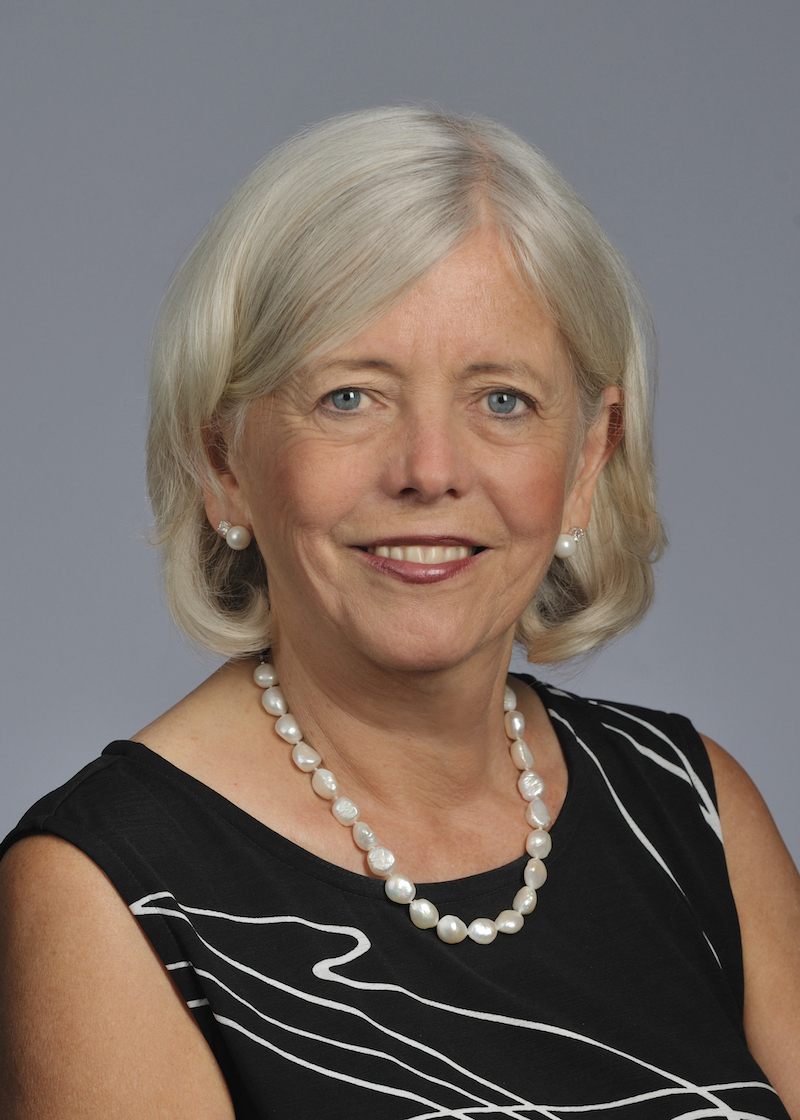
Read more about Dr. Briggs
Josephine P. Briggs, M.D., served as director of NCCIH from 2008 to 2017.
In addition to her leadership of NCCIH, Dr. Briggs was the former interim director of the NIH Precision Medicine Initiative® Cohort Program, a new model of patient-powered research that promises to accelerate biomedical discoveries and provide clinicians with new tools, knowledge, and therapies to select which treatments will work best for which patients. She is also co-leader of the NIH Common Fund Health Care Systems Research Collaboratory, a 5-year effort to conduct pragmatic clinical trials in partnership with clinical investigators and health care systems in the United States. Dr. Briggs is also a member of the NIH Steering Committee, the most senior governing board at NIH, and serves as a member of the NIH Scientific Management Review Board. She also is on the Executive Committee of the NIH Pain Consortium. In the past, she served as acting director of the Division of Clinical Innovation at the newly established National Center for Advancing Translational Sciences.
Dr. Briggs received her A.B. in biology from Harvard-Radcliffe College and her M.D. from Harvard Medical School. She completed her residency training in internal medicine and nephrology at the Mount Sinai School of Medicine in New York, New York, where she was also chief resident in the Department of Internal Medicine and a fellow in clinical nephrology. She then held a research fellowship in physiology at Yale School of Medicine in New Haven, Connecticut. Dr. Briggs was a research scientist for 7 years at the Physiology Institute at the University of Munich in Munich, Germany.
In 1985, Dr. Briggs moved to the University of Michigan in Ann Arbor, Michigan, where she held several academic positions including professor of internal medicine and physiology. Dr. Briggs joined NIH in 1997 as director of the Division of Kidney, Urologic, and Hematologic Diseases at the National Institute of Diabetes and Digestive and Kidney Diseases, where she oversaw extramural research activities. In 2006, she accepted a position as senior scientific officer at the Howard Hughes Medical Institute, and in 2008, she returned to NIH to accept her current position as Director of NCCIH.
Dr. Briggs's research interests include the renin—angiotensin system, circadian regulation of blood pressure, and policy and ethical issues around clinical research. She has published more than 175 research articles, book chapters, and other scholarly publications. Dr. Briggs also has served on the editorial boards of several journals and was deputy editor of the Journal of Clinical Investigation. She is an elected member of the Association of American Physicians and the American Society for Clinical Investigation and a fellow of the American Association for the Advancement of Science. She is a recipient of many awards and prizes, including the Volhard Prize of the German Society of Nephrology, the Alexander von Humboldt Scientific Exchange Award, and NIH Director's Awards for her role in the development of the Trans-NIH Type I Diabetes Strategic Plan, her leadership of the Trans-NIH Zebrafish Committee, and her direction of the NIH Health Care Systems Research Collaboratory. In November 2014, Dr. Briggs received the American Society of Nephrology John P. Peters Award in recognition for her wide-ranging contributions to improving the lives of patients and to furthering the understanding of kidney in health and diseases. She was also the recipient of the Department of Health and Human Services 2014 Secretary’s Award for Distinguished Service.
In 2018, Dr. Briggs became editor-in-chief of the Journal of the American Society of Nephrology.
Stephen E. Straus, M.D.
Stephen E. Straus, M.D., served as the first director of the National Center for Complementary and Alternative Medicine (now the National Center for Complementary and Integrative Health) at NIH from 1999 to 2006.
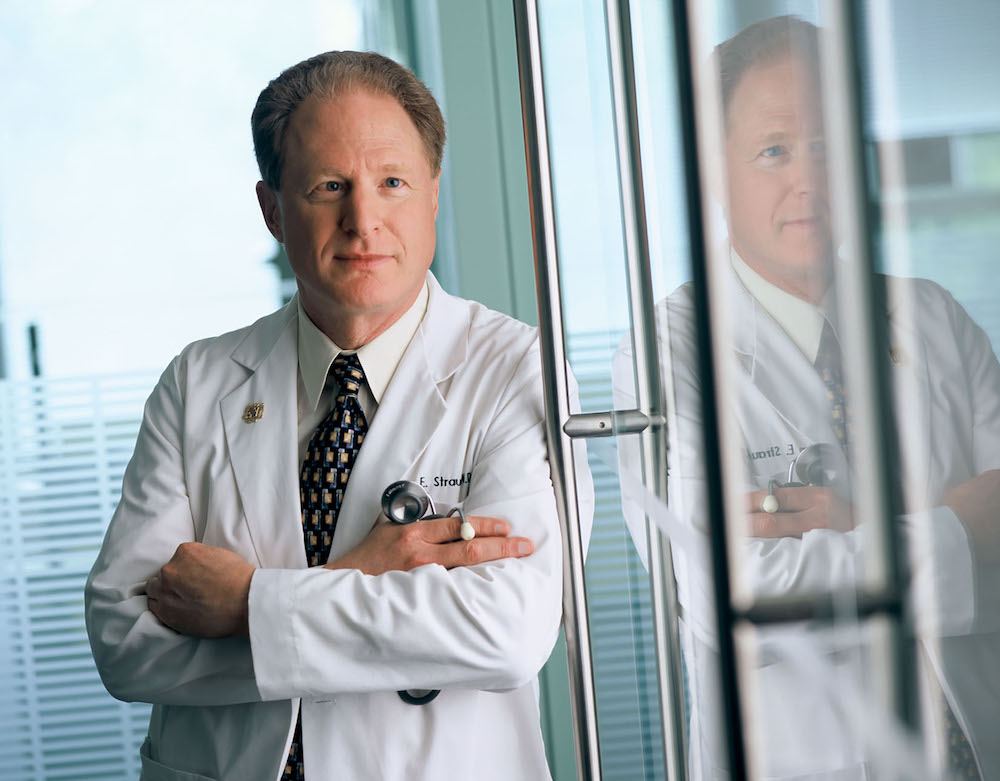
Read more about Dr. Straus
Stephen E. Straus, M.D., served as the first director of the National Center for Complementary and Alternative Medicine (NCCAM)* at NIH.
As director of the Center from 1999 to 2006, Dr. Straus built a comprehensive research enterprise, championing the efforts to establish the efficacy and safety of complementary health practices while upholding the rigorous standards of science for which the NIH is known.
He articulated a compelling agenda for scientific research and research training that, through his leadership, engendered broad interest and collaboration. Under his leadership, research on complementary and integrative health at NIH grew threefold, facilitating his vision of an evidence-based integrative approach to health care for the benefit of the public.
An internationally recognized scientist, Dr. Straus also held the position of senior investigator in the Laboratory of Clinical Investigation at the National Institute of Allergy and Infectious Diseases (NIAID) where he continued his research while also leading NCCAM.
As a physician-scientist, he was compassionate and kind, always searching for answers to improve the health of his patients. His bench-to-bedside research yielded original insights into the pathogenesis and management of several viral and immunological diseases. During his long career at NIH, he mentored many young investigators who have become extraordinary physician-scientists in their own right.
Dr. Straus had extensive basic and clinical research experience related to many conditions including chronic fatigue syndrome, Lyme disease, HIV/AIDS, chronic hepatitis B virus, and genital herpes infections and chronic post-herpetic pain. Under his leadership, scientists demonstrated that acyclovir suppresses recurrent genital and oral herpes. He was part of the nationwide research team that showed that a vaccine was effective in preventing shingles (herpes zoster virus) in older adults.
His studies of patients who failed to recover from infectious mononucleosis led Dr. Straus to characterize rare, fatal chronic Epstein-Barr virus infections. These studies also led to his recognition of the autoimmune lymphoproliferative syndrome (ALPS), the first disorder of lymphocyte apoptosis. His investigations of over 200 such patients form the basis of most of what is known today of this disorder’s clinical and biological features, including its pronounced risk of lymphoma.
Dr. Straus’s academic training began at Massachusetts Institute of Technology where he earned his Bachelor of Science degree in life sciences in 1968. In 1972, he received his medical degree from the Columbia University College of Physicians and Surgeons. Four years later, he became a fellow of Infectious Diseases at Washington University in St. Louis. Dr. Straus was board certified in internal medicine and infectious diseases.
Dr. Straus’s achievements were recognized by election to many prestigious professional societies, including the Association of American Physicians and the American Society for Clinical Investigation, and by appointment to the editorial boards of several scholarly journals. He was the recipient of five medals and other commendations from the U.S. Public Health Service, including the Distinguished Service Medal for innovative clinical research, and the HHS Secretary’s Distinguished Service Award. In 2007 he received the gold medal in academic medicine from his alma mater, the Columbia University College of Physicians and Surgeons. He was a member of the Clinical Research Roundtable of the National Academies’ Institute of Medicine and served on the National Institutes of Health Steering Committee.
Dr. Straus published more than 400 original research articles and edited several books.
* The Center’s name was changed by the U.S. Congress on December 17, 2014.